

Static Media
A go-to fixture of any list concerning the best actors of all time, Marlon Brando was a revolutionary performer on countless fronts. Not only did he redefine American acting, but he also delivered richly detailed characters in “The Godfather” and “Apocalypse Now” that people still chatter about today. To navigate the world of American movie acting means also exploring his many acclaimed performances. However, Brando was a profoundly unpredictable soul who also made some major duds.
Given Brando’s tremendous reach as an artist, it’s well worth exploring the grimier, less welcome corners of his career. Unfortunately, Marlon Brando, long thought of as a subversive figure who upended Hollywood’s acting norms, anchored multiple motion pictures that reinforced toxic film industry standards rather than challenge them. Marlon Brando’s most unwatchable movies today epitomize this reality. These five features were box office and/or critical hits when they first premiered. However, that initial wave of positivity couldn’t erase that these titles have all aged like milk.
Whatever informs their current unwatchable status, these five Marlon Brando star vehicles reflect that not even this acting legend’s creative instincts fired on all cylinders. Sometimes, they even led him to projects that were never acceptable to begin with.

The Teahouse of the August Moon
Loew’s Inc.
In the Donald Bogle book “Bright Boulevards, Bold Dreams: The Story of Black Hollywood,” a letter from the late 1940s penned by Betsy Blair (legendary screen performer and real-life partner to Gene Kelly) to the various Hollywood guilds is recounted. It called for significant improvements in how non-white — and especially Black — lives were portrayed on-screen. As an example of these horrors, Blair noted that “in several instances, producers have even gone to the length of using white actors in Negro roles.” The horrors of blackface and similar practices were glaringly apparent even in the ’40s.
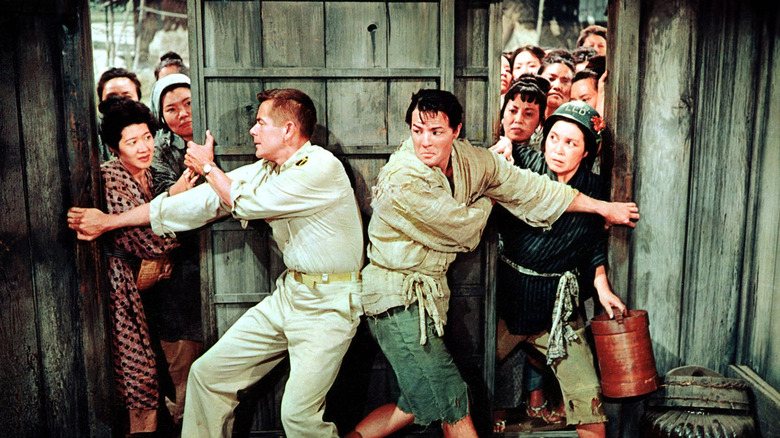
Alas, nearly a decade after that letter was written, these dehumanizing practices continued. That included the 1956 comedy “The Teahouse of the August Moon,” in which Marlon Brando played Japanese interpreter Sakini. Decades after its release and largely fading into obscurity, Brando’s “August Moon” performance remains widely criticized. Conceptually, the film was supposed to be about Japanese and American characters learning to get along. However, even putting aside that premise being a bit simplified after the horrors of the Nagasaki and Hiroshima bombings, any attempts at humanizing morals were undercut by Brando’s profoundly caricatured portrayal of Sakini.
Playing this individual like an aggressively arch cartoon character, Brando’s performance sank any attempts by “The Teahouse of the August Moon” to work as a piece of art. If only the film’s producers had heeded Betsy Blair’s warnings from years earlier.

The Nightcomers
Avco Embassy Pictures
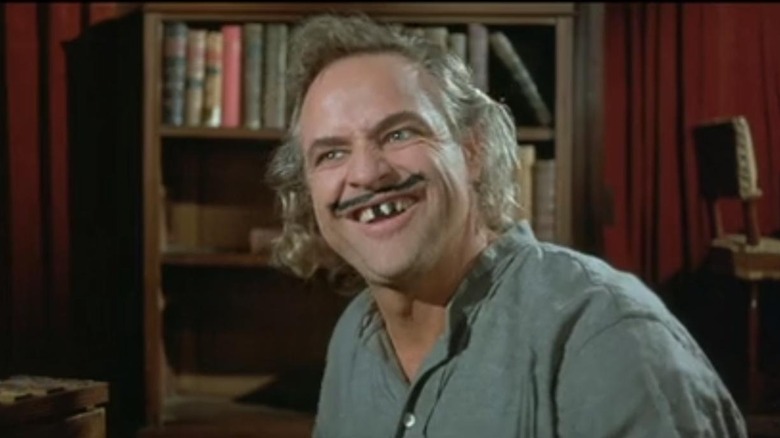
Part of the untold truth of Marlon Brando was that he was basically all washed up as a bankable actor by the end of the 1960s. Then, “The Godfather” came around, and in one fell swoop, Brando’s star was restored. Easily one of Marlon Brando’s best movies, “The Godfather” gave this performer a new lease on life that prior boondoggles like “Mutiny on the Bounty” made impossible to obtain. But just before his Don Vito Corleone performance changed everything, he headlined “The Nightcomers” as Peter Quint. This Michael Winner directorial effort functioned as a prequel to the famous novella “The Turn of the Screw” and co-starred Stephanie Beacham and Thora Hird, among others.
At the time of its release, Brando secured a BAFTA best actor nomination for “Nightcomers.” Unfortunately, not every aspect of the movie is still regarded so loftily. For one thing, Brando’s decision to give Quint a peculiar Irish accent has earned its fair share of modern ribbing. Meanwhile, the project’s attempt of being a cozy prequel to “The Turning of the Screw” has only garnered more controversy with time, especially given how many subsequent prequels with similarly tidy narrative impulses have dominated theaters. The blueprint for their failures was laid down by “The Nightcomers.”
While less egregious than some films on this list, “The Nightcomers” has still aged weirdly and not for the better.
Sayonara
Warner Bros. Pictures
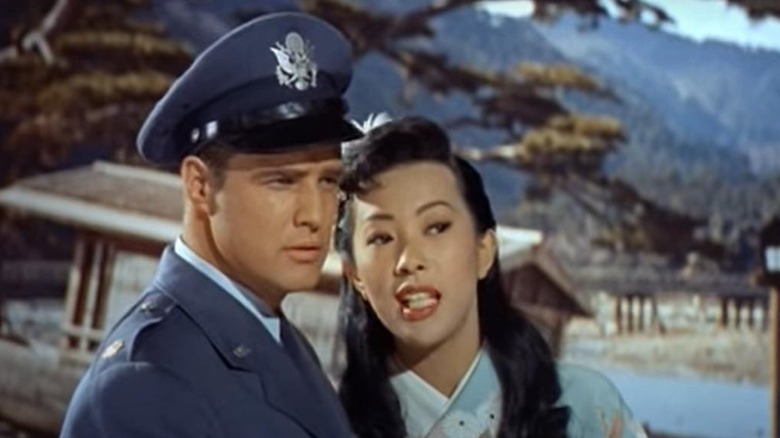
A year after “The Teahouse of the August Moon,” Brando returned to anchor another movie about American and Japanese cultures colliding with “Sayonara.” Here, he portrayed Major Lloyd “Ace” Gruver, who, while stationed in Japan, falls in love with Hana-ogi (Miiko Taka). Their relationship is complicated by America declaring mixed-race marriages illegal and Gruver already being engaged to Eileen (Patricia Owens). When it first hit theaters, “Sayonara” was a critical triumph. It scored a whopping ten Oscar nominations and even won a slew of them, including acting victories for supporting performers Red Buttons and Miyoshi Umeki.
Decades after its debut, though, assessments of “Sayonara” are more complicated than the enduringly euphoric reputation of the best movies of the 1950s. Writer Scarlet Cheng of the Los Angeles Times, for one, observed that “Sayonara” and its pleas for racial tolerance were undercut by its often dehumanizing perspective on Japanese-American women, specifically in idealizing them as “subservient” to white men. The title’s stereotypical approach to depicting Japanese culture has also been critiqued in modern reviews. Similarly troublesome and persistently controversial is its reductive approach to Japanese-American men, embodied by Ricardo Montalban in yellowface to portray the most prominent Japanese-American male character.
While “Sayonara” presented itself as forward-thinking, it unfortunately fell into common Hollywood traps when depicting foreign countries. No amount of Oscar glory can erase these frustrating issues.
Viva Zapata!
20th Century Fox
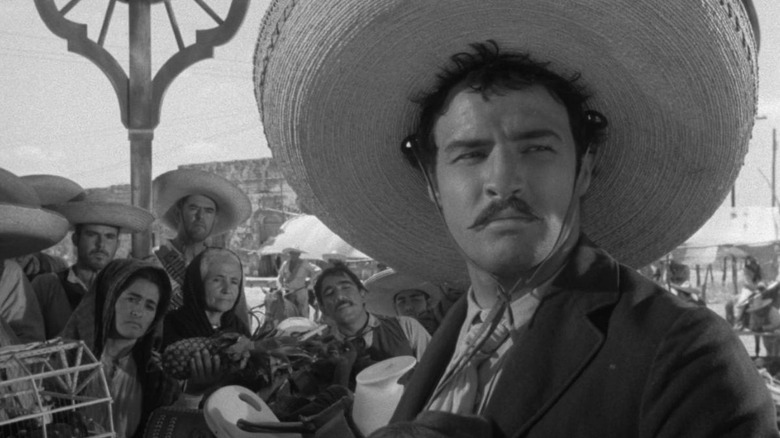
For anyone hoping that “The Teahouse of the August Moon” was the only example of Marlon Brando unfortunately playing a non-white ethnicity, think again. As if ratting out his friends to HUAC wasn’t bad enough, director Elia Kazan’s 1950s exploits also included helming “Viva Zapata!,” where Brando played legendary Mexican figure Emiliano Zapata. Two years after “Viva Zapata!” hit theaters, the excellent pro-labor movie “Salt of the Earth” populated its cast with actual Mexican performers like Rosaura Revueltas and Juan Chacón. Meanwhile, “Viva Zapata!” put Brando, Jean Peters, Joseph Wiseman, and others in brownface and called it a day.
When it first hit theaters, “Viva Zapata!” did quite well in establishing a positive reputation. Brando even won a prestigious Cannes award for his performance asZapata. However, this title eventually became another popular movie that aged terribly. In hindsight, “Viva Zapata!” has come under fire for being so far removed from Mexican culture and history that it came off as unintentionally comical. Then there’s the use of the one major Mexican performer, Anthony Quinn, as a traitorous villain while the white people in brownface get to be heroic.
Everything about “Viva Zapata!” was woefully miscalculated, which makes it downright cringe-worthy to watch today. Spend your time watching actual ’50s Mexican films, such as Luis Buñuel’s “Él,” instead.
Last Tango in Paris
United Artists
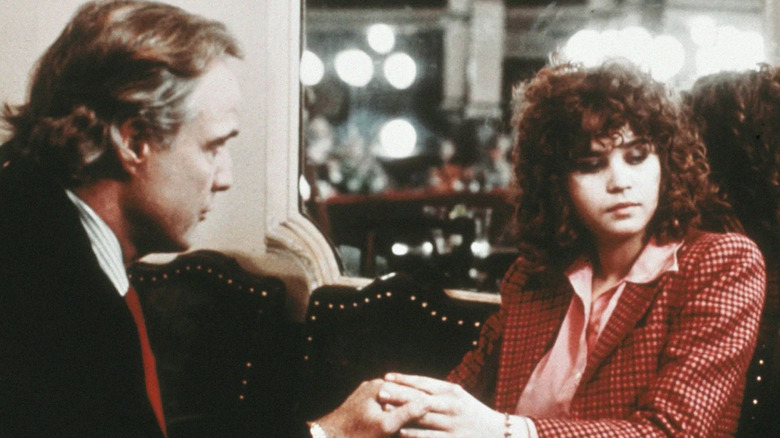
Today considered one of the best 1970s movies of all time, “Last Tango in Paris” was an instant critical darling when it was released in 1972. No less than Pauline Kael hailed it as a landmark event in cinema, while Martin Scorsese praised “Last Tango in Paris” as a microcosm of what made director Bernardo Bertolucci special. However, a dark cloud hovers over this motion picture. “Last Tango in Paris” features a scene involving Marlon Brando’s Paul raping Jeanne (Maria Schneider). The execution of that moment, and especially its use of butter, was not cleared with Schneider beforehand.
“They only told me about it before we had to film the scene and I was so angry … I felt humiliated and to be honest, I felt a little raped, both by Marlon and by Bertolucci,” Schneider recalled in 2007 with Daily Mail. “After the scene, Marlon didn’t console me or apologize. Marlon said to me: ‘Maria, don’t worry, it’s just a movie,’ but during the scene, even though what Marlon was doing wasn’t real, I was crying real tears.” This horrifying and harrowing account, coupled with Bertolucci declaring “I feel guilty, but I don’t regret it” in response to Schneider’s testimony (via The Guardian), has now put “Last Tango in Paris” in an unavoidable new light.
Whatever its initial power, the larger context of “Last Tango in Paris” now boils down to it being a movie where two men traumatized a 19-year-old actor.