

Static Media
Ridley Scott is one of the most influential science-fiction directors in history, with multiple movies to his name that are among the genre’s most definitive. But despite his overriding influence, the veteran filmmaker only has six sci-fi films in his back catalogue — and the sixth is just now arriving in theaters. In a filmography stretching to 30 films and counting, his influence has been the most outsized in that genre, which is why it’s surprising that we’ve only now started counting his sci-fi movies on more than one hand. He’s made more historical epics over the years, though few of those have had anywhere near the influence of his genre-defining futuristic tales.
With “The Dog Stars” marking his return to this cinematic category, we’ve looked back through his filmography to rank his sci-fi efforts from our least-to-most favorite. What we’ve found is that even the ones that disappointed upon initial release have aged surprisingly well, and that his poorly reviewed latest effort could be similarly reappraised as the years go on. You’ll have to keep reading if you want to find out how it compares to his earlier masterpieces, though.
If this whets your appetite for more sci-fi, head over here for our ranking of the 107 best movies in the genre’s history, which includes at least one film from the following countdown …

6. Prometheus
20th Century Fox
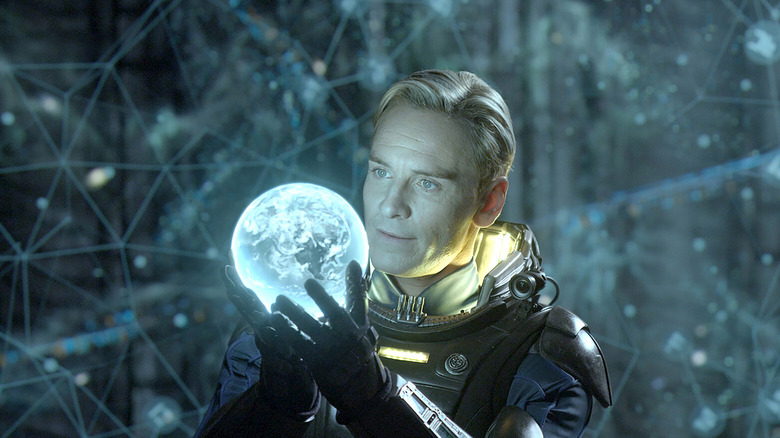
Ridley Scott’s return to the Alien franchise was a masterclass in anti-fan service, working with a Damon Lindelof script that sidestepped obvious prequel storytelling to spin a weightier tale about a team of space researchers seeking the origins of humanity — and finding what might cause its extinction.
What made “Prometheus” truly divisive was that this attempt at elevated sci-fi only aspired to raise big existential questions rather than answer them. The instincts that served Lindelof well on the small screen –- where the likes of “Lost” and “The Leftovers” had several seasons to grapple with their conceits -– were not a perfect fit for a big-budget blockbuster that also had to scratch the monster movie itch. Spectacular gross-out sequences sit awkwardly next to more ponderous moments, and “Prometheus” never quite found its lane.
The movie is far from a failure, however, as it does offer some big, bombastic horror thrills along the way, especially in a birthing sequence with Noomi Rapace’s Elizabeth that went further in extremity than the original chest burster scene. Rapace doesn’t leave a particular impression as the movie’s Ripley equivalent, but she is bolstered by a strong supporting cast of A-listers and character actors, with Michael Fassbender’s malevolent android David stealing the show. It’s an ambitious failure of a movie, but there are lots of surface level pleasures to be found within.

5. The Dog Stars

20th Century Studios
Ridley Scott’s latest sports a 38% on Rotten Tomatoes as of this writing, but we’d argue “The Dog Stars” is far from the disaster it’s being painted as, even if it doesn’t fully come together. Set in a post-apocalyptic 2035 in the fallout of a deadly pandemic, Jacob Elordi stars as Hig, a helicopter pilot living with a hardened survivalist (Josh Brolin) who doesn’t hesitate to kill any trespassers. Hig is still grieving the death of his wife and struggles to fight off suicidal thoughts, but a radio transmission inspires him to try finding a civilization he hopes is still out there.
Of the films Scott has made since his filmmaker brother Tony died in 2012, “The Dog Stars” most explicitly reckons with that grief through the protagonist’s struggle of continuing to keep going as normal after losing his wife. But it simultaneously has a humanism and hard-won optimism for the future, with the social divides in this barbaric dystopia a non-subtle parallel our own post-pandemic world, with the director urging the audience to hold onto hope amidst the despair.
It’s the unmistakable work of an 88-year-old director sending a message to younger generations about a future he won’t be around for, and it’s stealthily touching beneath all the hyper-violent action sequences. The movie juggles too many tones and the neo-western trappings of its later acts include some questionable racial politics, but the overarching message is deeply endearing -– it shouldn’t be written off.
4. Alien: Covenant
20th Century Fox
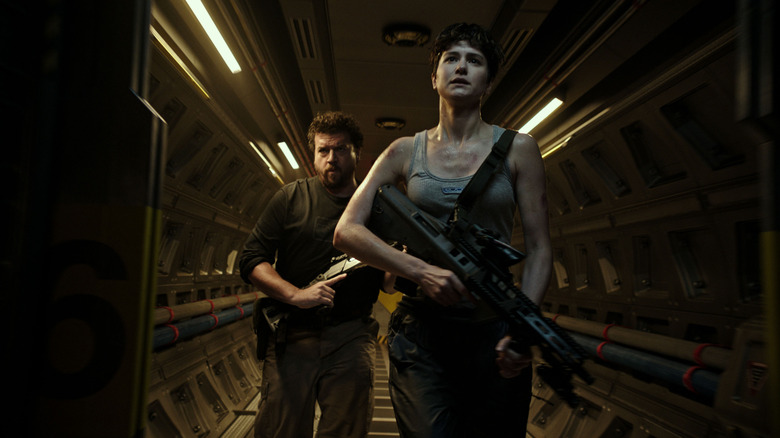
Four years later, the revamped “Prometheus” sequel proved even more divisive, but did a far better job of picking up the weighty themes and incorporating them into one of the most nihilistic blockbusters ever released. Following a group of scientists on a mission to colonize an uninhabited planet, a nearby broadcast signal leads them to David (Michael Fassbender), an android model long discontinued for its advanced humanity.
After saving them from a Neomorph, they use him as a guide but soon discover he’s been spending his years in the wilderness trying to engineer a new, all-powerful lifeform using the planet’s native creatures native –- and soon sets his sights on the scientists, who will be crucial to the next stage of his experiments.
This time around, Fassbender gives a dual performance, with the crew of the Covenant accompanied by their own android Walter, a newer iteration of David that lacks his full sentience. It’s the story’s darkest irony that he’s the greatest defender of the human characters, with David having grown so resentful of his creators that he’s eagerly pursuing an evolutionary experiment that could wipe out humanity altogether.
In this regard, it offers the food for thought and dark thrills that “Prometheus” couldn’t tackle simultaneously, while upping the ante with its gross-out spectacle. If you wrote the movie off on release, it’s certainly worth revisiting; viewed as a “Prometheus” sequel that improves upon its predecessor rather than another “Alien” prequel, it’s a black-hearted gem.
3. The Martian
20th Century Fox
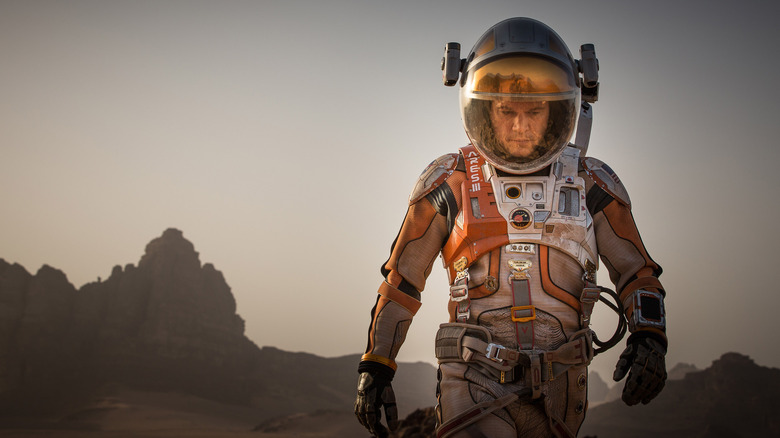
The highest grossing live-action, non-franchise movie of 2015, as well as Ridley Scott’s most recent best picture nomination at the Oscars, “The Martian” is the most straightforward crowd pleaser on this list -– which is something of an achievement, considering that in the wrong hands, it could feel like a dull science lesson.
Adapted from the best-selling novel by Andy Weir, which similarly strove for detailed scientific accuracy, this tale of a botanist (Matt Damon) stranded on Mars following a dust storm was less of a survival thriller and more of a how-to guide demonstrating how someone could survive while stranded for years in a hostile environment. Back on Earth, his team members assist NASA in an ambitious operation to rescue him, which similarly relies on real science; although set in the near future, nothing in their plan was entirely fictitious.
Placed next to the more fantastical Weir adaptation “Project Hail Mary,” “The Martian” feels comparatively realist with its focus on scientific process and problem solving under pressure. It fudges a few details -– you’d never get a sandstorm on Mars that dangerous, for example –- but still won the acclaim of many scientists for depicting the profession as equally important and adventurous.
It’s likely that many kids saw this movie and realized a career in science was calling them. That a film could inspire that without compromising on popcorn thrills is exactly why we need more movies that feel more science-fact than science-fiction.
2. Alien
20th Century Fox
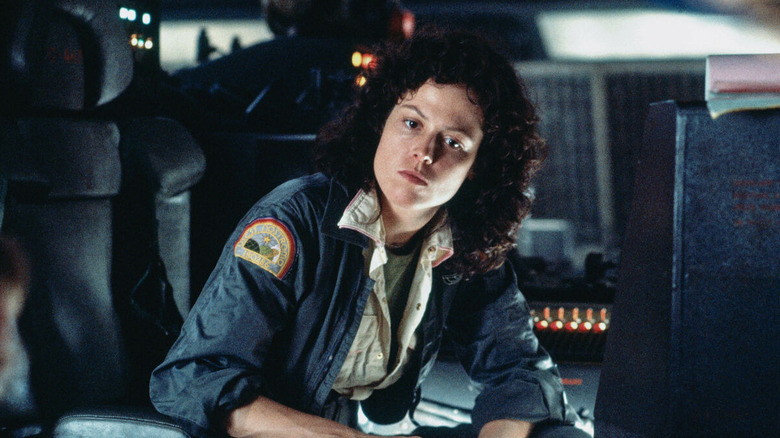
Released two years after “Star Wars” transformed how Hollywood approached sci-fi, Ridley Scott’s despairing “Alien” looked like a grim throwback to the New Hollywood style from years earlier. It wasn’t an immediate critical darling either, with even positive reviewers like Gene Siskel lamenting it as an old-fashioned haunted house movie that happened to be set on a spaceship.
To the public, it was an immediate sensation, a terrifying update of the classic 1950s monster B-movie with scarier creatures (courtesy of H.R Giger’s unparalleled designs), bloodier set pieces, and an enveloping sense of dread throughout. There’s debate if James Cameron’s “Aliens” tops it, but his satisfying action bombast doesn’t work near as well as Scott’s original slow burn shocker.
Watched now, after years of installments exploring big questions and incorporating bigger monster antagonists, the most striking thing about “Alien” is how grounded it feels. Ripley (Sigourney Weaver) and the Nostromo team are introduced wiling away the hours, with Scott depicting space travel as menial as oil rig work; long periods away from home, with longer stretches of doing nothing between tasks.
He conjures up an impressive sense of isolation long before the Xenomorph appears, and it’s that depiction of thankless work that makes the high concept so easy to invest in. We may never have left Earth, but we’ve been in Ripley’s shoes, and would also struggle to survive a deadly threat whilst completely burned out from work.
1. Blade Runner

Warner Bros
Scott went even more ambitious with his follow-up to “Alien,” adapting Philip K. Dick’s short story “Do Androids Dream of Electric Sheep?” as a gorgeous dystopian art movie on a blockbuster budget. A tribute to classic noir movies with Harrison Ford’s Deckard as the hard-boiled investigator, the genre-hybrid of “Blade Runner” confounded audiences and critics upon its original 1982 release; it might be the most famous case of a movie receiving a complete cultural re-evaluation in later years.
This is largely due to Scott’s subsequent director’s cuts, which stripped off the over-explanatory voiceover of the theatrical release to become the richer, more enigmatic tech-noir mystery it was, making Ford’s brooding protagonist more mysterious in the process.
Released a few weeks after “E.T” highlighted that audiences wanted escapism and humanism in their science-fiction, “Blade Runner” was met with a cold shoulder despite its A-list star power. Few would have predicted its influential power, with its rain-soaked futuristic Los Angeles formative in how future blockbusters visualized dystopias, its high-tech world-building gradually helping popularize the cyberpunk genre.
Scott recently declared that he sees himself as more of an “influencer” than a director, and with “Blade Runner,” you understand what he meant; few have left a mark on a genre so big, few films released in their wake can escape their creative influence. Is it any surprise that we previously called it the best sci-fi of all time?
